Oranchuk, D. J., et al. Hook Grip Improves Power Clean Kinetics and Kinematics. International Society of Biomechanics in Sports Proceedings.

Drinkwater, E. J., et al. Research summarized by Deakin University on hook-grip performance in Olympic lifts.
Torokhtiy, A. Hook Grip: Types, Benefits and How to Do. Torokhtiy Weightlifting.
Oranchuk, D. J., et al. Hook Grip Improves Power Clean Kinetics and Kinematics. International Society of Biomechanics in Sports Proceedings.
If you spend enough time around Olympic lifting, you’ll hear coaches constantly telling athletes to use the hook grip. And usually the response is something like: “But it hurts.”
The truth is, it might feel uncomfortable at first, but the hook grip is one of the most important skills you can learn if you want to lift heavier, move the bar better, and become more efficient in the snatch and clean.
As a coach, this is one of the first habits I try to build with athletes learning Olympic lifts.
What Is the Hook Grip?
The hook grip is simple:
1. Place your hand at a downward angle on the bar
2. Wrap your thumb around the bar first
3. Place your index and middle fingers over your thumb.
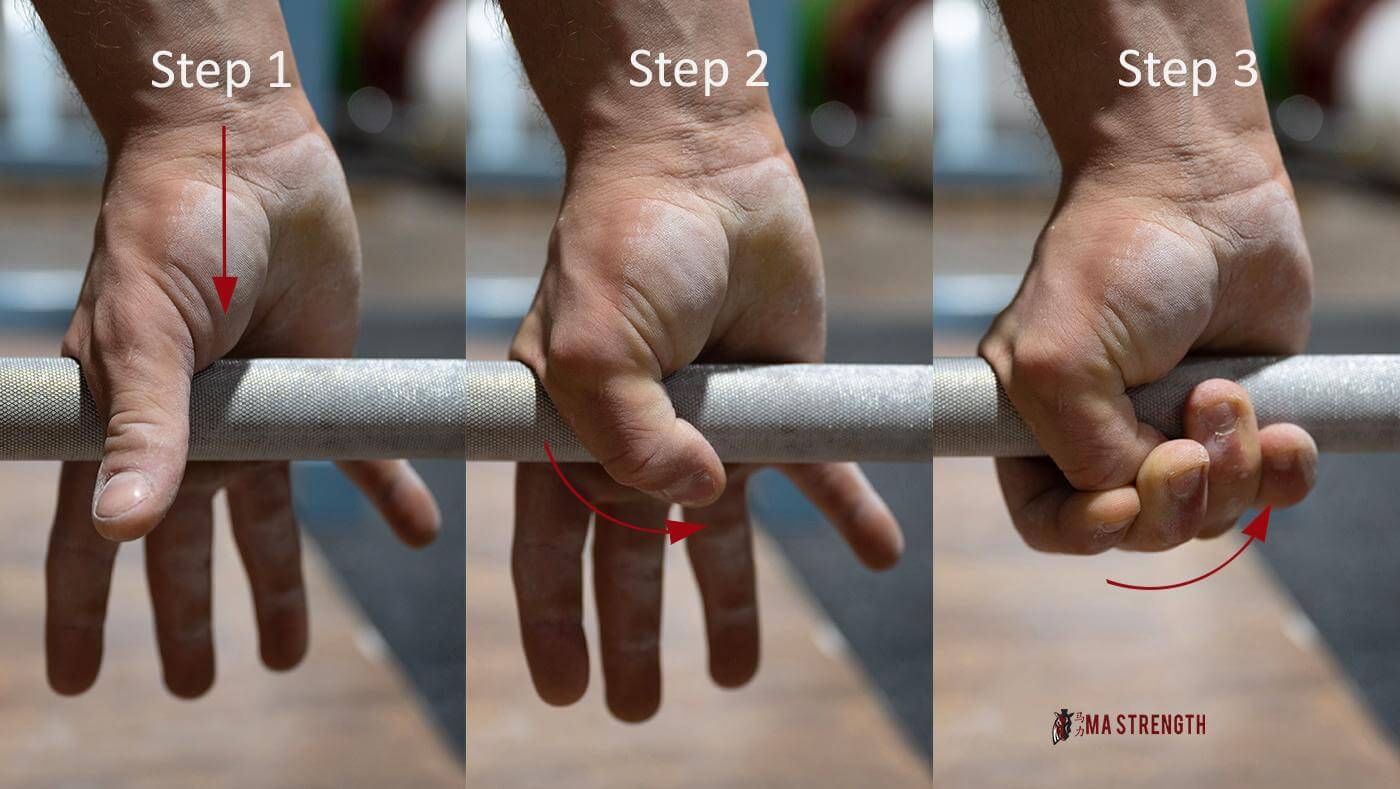
This essentially “locks” your hand onto the barbell. Instead of relying purely on finger strength to hold onto the bar, the thumb becomes the anchor point.
That small adjustment makes a huge difference when the bar starts moving fast.
It Keeps the Bar Secure
Olympic lifts are explosive. The bar is accelerating quickly, and the last thing you want to worry about is losing your grip.
With a regular grip, the bar can start to roll toward your fingertips as the weight gets heavier. The hook grip prevents that. Your fingers trap the thumb against the bar, creating a much more secure hold.
This is why you’ll see almost every competitive weightlifter in the world using it.
When the grip is secure, you can focus on what actually matters: producing power through the legs and hips.
It Can Improve Performance
Research looking at the power clean found that lifters using the hook grip produced:
• Higher one-rep maxes
• Faster bar speeds
• Greater power output
The likely reason is simple: when you aren’t worried about the bar slipping, you can focus on applying force to the bar.
And in Olympic lifting, speed and power are everything.
It Reduces Grip Fatigue
If you’ve ever tried heavy pulls with a normal double-overhand grip, you know how quickly your forearms blow up.
The hook grip takes some of that stress off the fingers and forearms. Because the thumb is locked in place, you don’t need to squeeze the bar as hard to maintain control.
This allows you to keep your upper body more relaxed, which is exactly what we want during the pull. The power should come from the legs and hips, not from death-gripping the bar.
It Helps with Better Technique
When athletes struggle with their grip, they often compensate by overusing their arms.
That can lead to:
• Early arm bend
• Poor bar path
• Inefficient pulls
The hook grip helps athletes stay more relaxed through the arms so the bar can move the way it’s supposed to.
Better grip → better bar path → better lifts. ⸻
The One Downside: It’s Uncomfortable at First
Let’s be honest, the hook grip doesn’t feel great when you first start using it.
Your thumbs will probably feel tender for a few weeks. Most lifters use thumb tape, which helps a lot.
The good news is that your thumbs adapt quickly. After a little time, it just becomes normal.
And once you’re used to it, lifting without the hook grip will actually feel worse.
Final Thoughts
The hook grip is one of those small details that makes a big difference over time.
If you’re serious about improving your Olympic lifts, it’s worth committing to it early. Yes, it takes a little time to get used to, but the payoff is a stronger grip, better bar control, and ultimately better lifts.
Sometimes the simplest technical changes are the ones that move the needle the most.








.png)
.png)
.png)
.png)